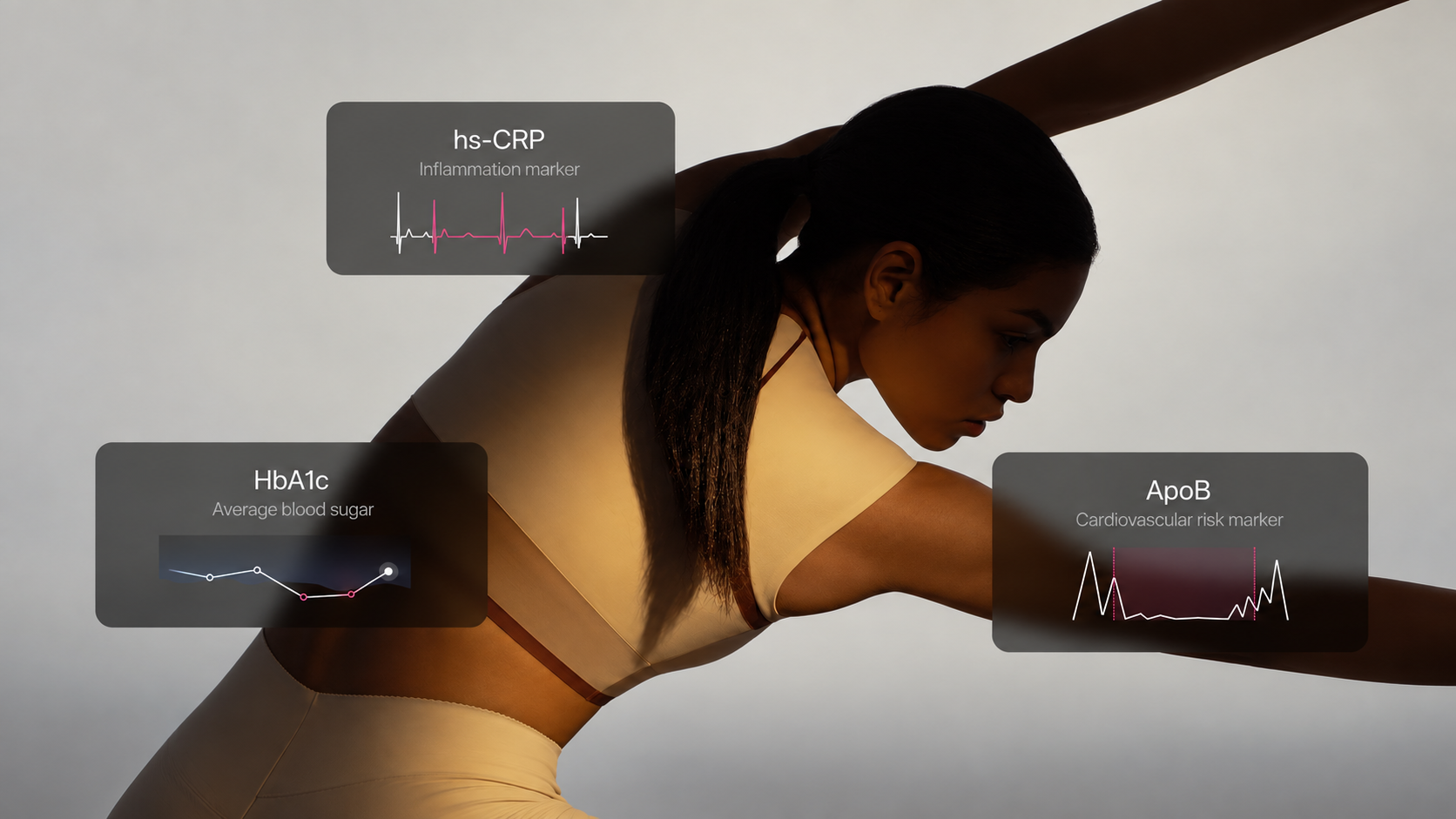
The most consequential changes in your body rarely begin with a symptom.
They often start appearing in measurements such as cholesterol, blood sugar, or blood pressure long before you feel anything at all. These measurable signals are known as biomarkers.
Cardiovascular disease, insulin resistance, chronic inflammation, and metabolic decline can develop over many years, often without pain, discomfort, or any obvious indication that something is wrong.
By the time symptoms appear, the underlying biological process may already be well established.
Modern medicine has transformed our ability to respond to illness. It is exceptionally effective when a patient presents with an acute infection, heart attack, a traumatic injury or a life-threatening complication. It has extended life expectancy, reduced mortality, and made previously fatal conditions treatable.
It was not, however, primarily designed to show an apparently healthy person how their biology is changing before disease becomes clinically visible.
The World Health Organization estimates that around 80% of premature heart disease, stroke, and diabetes could be prevented. Yet prevention accounted for only around 3% of total healthcare expenditure across OECD countries in 2023.
For much of the past century, the prevailing model of medicine remained broadly unchanged: identify the condition, establish a diagnosis, and begin treatment.
Dr Niko Mihic, Chief Medical Officer at Axo Longevity and Medical Supervisor at Real Madrid, believes that model is now beginning to evolve.
“For a century, it was diagnose and cure. Diagnose and cure. We built hospitals around those systems,” he says.
“The new evolution of medicine is early detection and prevention, as opposed to diagnosis and cure.”
That shift depends on the ability to identify changes before they become symptoms and to measure what is happening inside the body while there is still time to respond.
This is where biomarkers become essential.
“Why should you look at your biomarkers? Because they show you who you are, what your body has been through and how you can get better,” Dr Mihic explains.
“A biomarker is data about yourself,” explains Dr Niko Mihic
A biomarker, short for biological marker, is an objective measurement that reveals something about how the body is functioning.
It may be:
The FDA-NIH Biomarker Working Group defines it as “a characteristic that is objectively measured and evaluated as an indicator of normal biological processes, pathogenic processes, or responses to an intervention.”
“A biomarker is an indicator of your health,” Dr Mihic explains. “It can be anything from a pulse rate or blood pressure reading to a urine or blood test. Essentially, it is data about yourself.”
What separates a biomarker from a symptom?
A symptom is something you experience and describe, such as tiredness, pain, dizziness, or shortness of breath. A biomarker is something that can be measured objectively, whether or not you feel anything unusual.
The two do not always appear at the same time. A person may feel entirely well while a biomarker has already begun to change.
Take cardiovascular risk as an example.
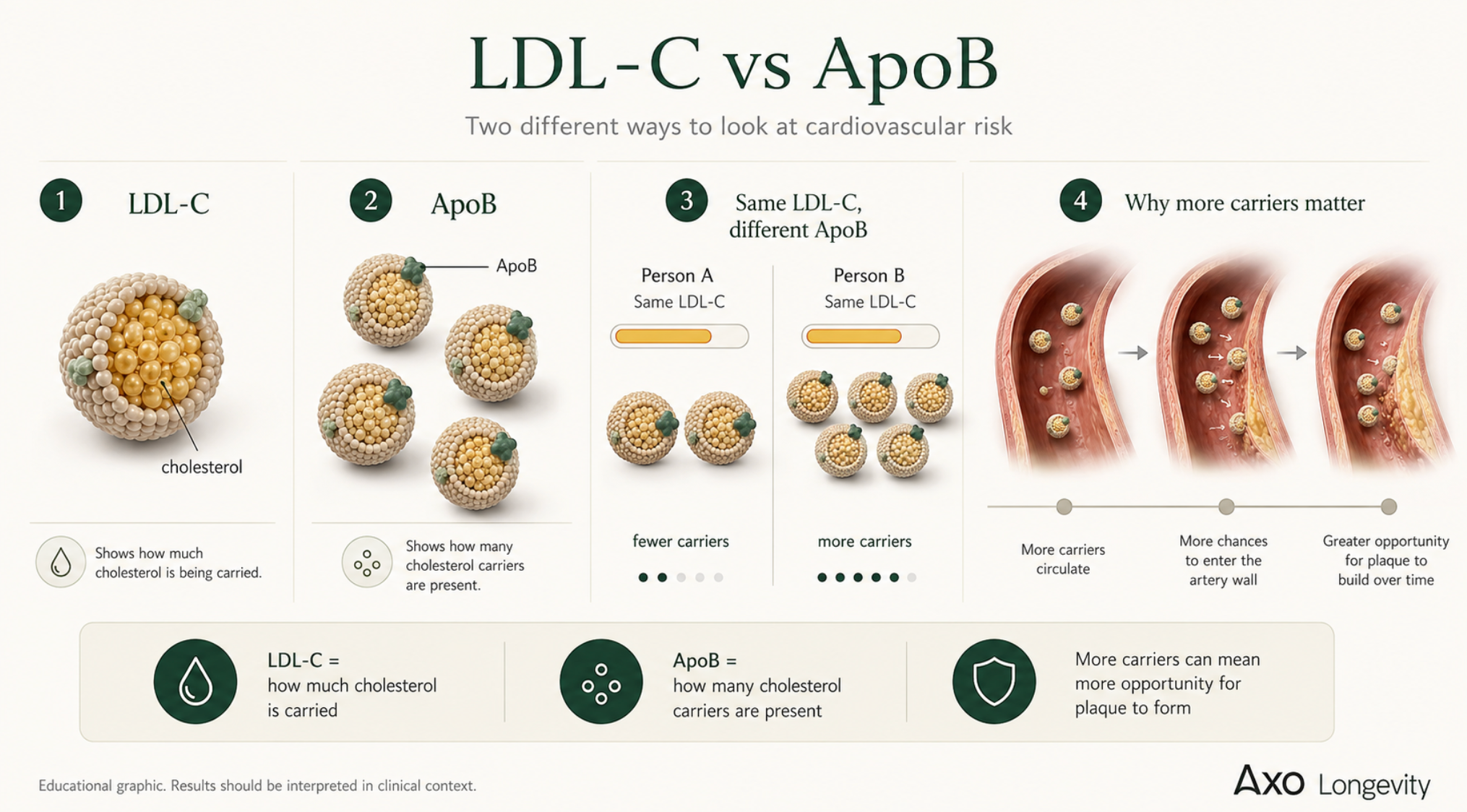
A standard cholesterol test commonly reports LDL cholesterol, often referred to as “bad cholesterol.” LDL cholesterol measures the amount of cholesterol being transported inside certain particles in the bloodstream.
But the amount of cholesterol is not always the same as the number of particles carrying it.
ApoB, short for apolipoprotein B, provides a different perspective. It is a protein found on particles that can enter the artery wall and contribute to the development of atherosclerotic plaque.
Because each of these particles carries one ApoB molecule, measuring ApoB provides an estimate of how many potentially artery-damaging particles are circulating in the blood.
The distinction matters:
Two people may have a similar LDL cholesterol result but a different number of ApoB-containing particles.
The person with more particles may have greater exposure to the particles that can enter and become retained within the artery wall, even when their conventional cholesterol result does not initially appear concerning.
Atherosclerosis is the gradual accumulation of plaque within the arteries.
The process can develop over decades without causing pain or other obvious symptoms. During that time, ApoB-containing particles may enter the artery wall, become retained there, and contribute to inflammation and plaque formation.
A person may feel completely healthy while the underlying process continues.
Symptoms such as chest pain or shortness of breath may emerge much later, when an artery has narrowed significantly or when a plaque ruptures and contributes to a heart attack or stroke.
This is why cardiovascular risk cannot be assessed through symptoms alone.
A broader cardiovascular assessment may consider:
Note: No single biomarker can predict exactly who will experience a heart attack or stroke. Its value lies in revealing one part of a wider biological process that may already be underway.
Axo Longevity helps you assess your cardiovascular risk
We are living longer. But those additional years are not always spent in good health.
A 2024 analysis published in JAMA Network Open, covering 183 countries, found that the average gap between lifespan and healthspan had widened to 9.6 years.
In practical terms, people are living close to a decade with illness, disability, or reduced health before death.
This growing divide has changed the question from simply how long we live to how well we live during those years.
Biomarkers can help answer that question by providing measurable information about how different systems in the body are functioning. Their value lies less in the amount of data collected and more in the clarity that data can provide when it is interpreted properly.
For Dr Mihic, awareness is the starting point.
“One of those things is awareness of who we are and how we can take better care of our health,” he explains. “Nothing really works if you don’t work for yourself.”
Not necessarily.
A laboratory reference range shows how your result compares with values observed in a defined reference population. It helps clinicians identify measurements that fall outside an expected interval, but it does not provide a complete assessment of your health.
That is why Dr Mihic encourages people to ask a simple question:
“Normal for whom?”
The meaning of a result may depend on:
A measurement may fall within the stated range while moving steadily away from your previous baseline. Another may sit slightly outside the range without necessarily indicating disease.
Neither should be interpreted on its own.
The goal is not to chase a perfect number or push every biomarker towards one end of a reference range. It is to understand what the result means in the context of your wider health and how that picture is changing over time.
That is what biomarkers can offer: greater clarity about where your health stands today, and better information for the decisions that may shape the years ahead.
We discuss this in the podcast
In this episode, Dr Niko Mihic, Axo Longevity’s Chief Medical Officer, explores ageing, longevity and the everyday factors that shape long-term health, from sleep and inflammation to biomarkers, recovery and the habits that help you stay healthier for longer.
What is a biomarker in simple terms?
A biomarker is any measurable sign of what is happening inside your body, such as your blood sugar, cholesterol, or blood pressure. It can be measured objectively, whether or not you feel anything, which is what makes it useful for spotting change early.
Is a biomarker the same as a symptom?
No. A symptom is something you feel and describe, like tiredness or a headache. A biomarker is something a test measures, and it can move years before you feel any symptom at all.
What are the most common biomarkers?
Some of the most widely measured are cholesterol and ApoB for heart health, HbA1c for blood sugar, hs-CRP for inflammation, and vitamin D. A comprehensive panel measures many more across every major system.
Can biomarkers detect problems before symptoms appear?
Yes. Many biomarkers begin to shift years before a condition would ever cause symptoms, which is why they are central to preventive health rather than only diagnosis.
Where are biomarkers measured?
Most come from a blood, urine, or saliva sample. Others are physical readings taken directly from the body, like blood pressure, or results from a scan.
Your biomarkers are the clearest picture you have of what is happening inside your body right now. Axo Longevity measures more than 100 of them across +36 health areas, reads them against optimal ranges rather than just "normal," and turns the results into a plan built around for you.
Learn more about Axo Longevity
The information contained in this article is provided for educational purposes only and does not constitute medical advice. Always consult a qualified healthcare professional before making changes to your lifestyle or medical monitoring.
References