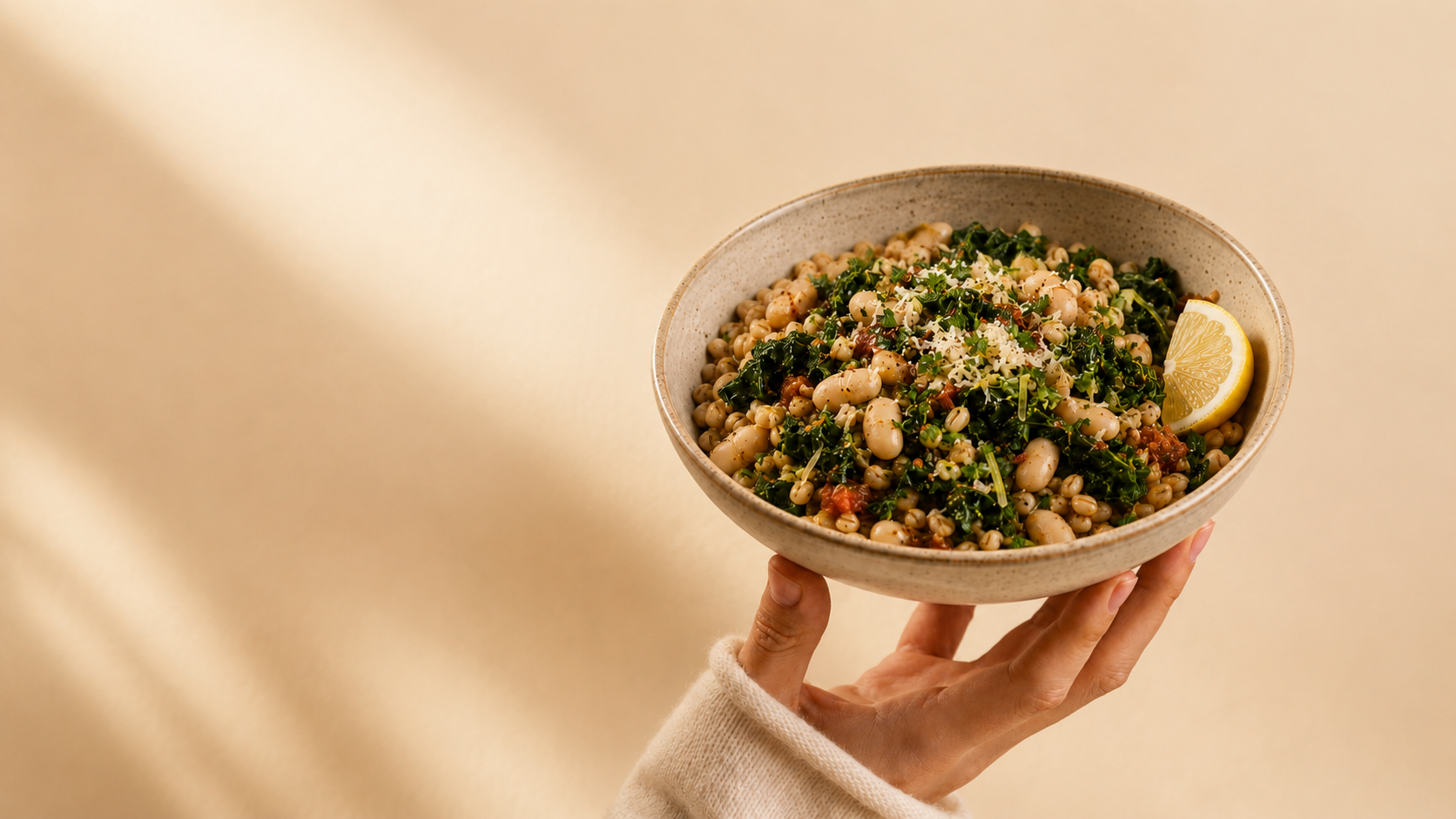
After a summer of holidays, restaurant meals and less structure around food, September often feels like the point where you want dishes that are easy to make but still support your health.
This high-fibre barley and white bean bowl is just what you need. The barley stays slightly chewy, the white beans soften into the bowl, the greens cook down, and lemon with olive oil keeps everything fresh rather than heavy.
It is also a useful way to add more soluble fibre to your diet. Barley contains beta-glucan, a type of soluble fibre that can help lower blood cholesterol when eaten regularly as part of a balanced diet. The beans add plant protein, while the greens and olive oil bring polyphenols and healthy fats into the meal.
That makes this dish a particularly useful recipe if you are paying more attention to cholesterol, LDL cholesterol or ApoB, and want meals that support heart health without turning dinner into another thing to overthink.
The real benefit is that it is easy to repeat. It’s a one-pot meal with simple ingredients, and it’s the kind of dish you can come back to during the week without getting bored.
What is ApoB?
Apolipoprotein B (ApoB) is a protein found on cholesterol-carrying particles that can contribute to plaque build-up in the arteries. Measuring ApoB can help give a clearer picture of how many of these potentially harmful particles are circulating in your blood.
For the barley
For the beans and greens
To serve
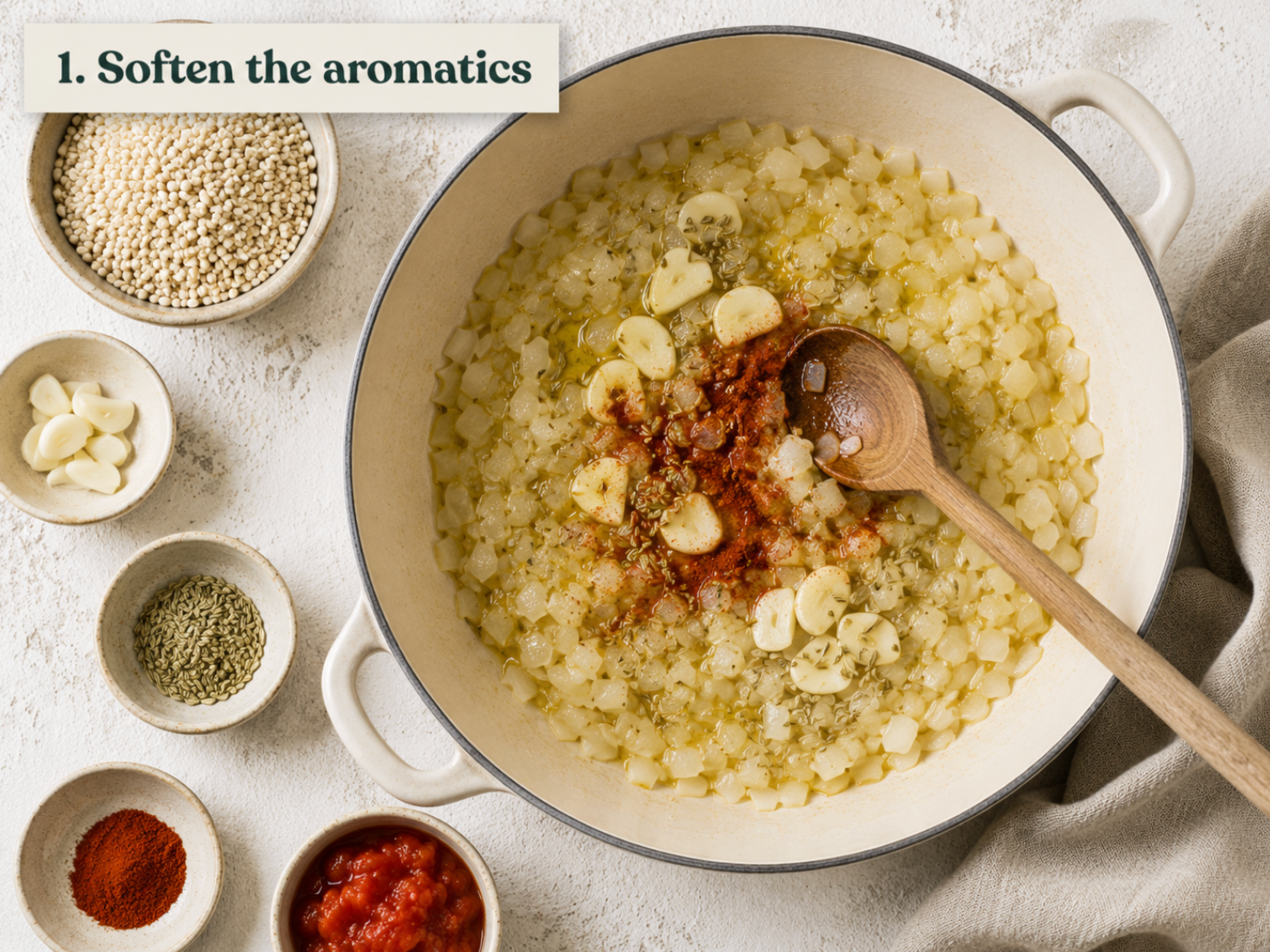
1. Soften the aromatics: Warm the olive oil in a wide pot over medium heat. Add the onion and cook for 4 to 5 minutes until soft. Stir in the garlic, fennel seeds, and paprika and cook for about a minute until fragrant.
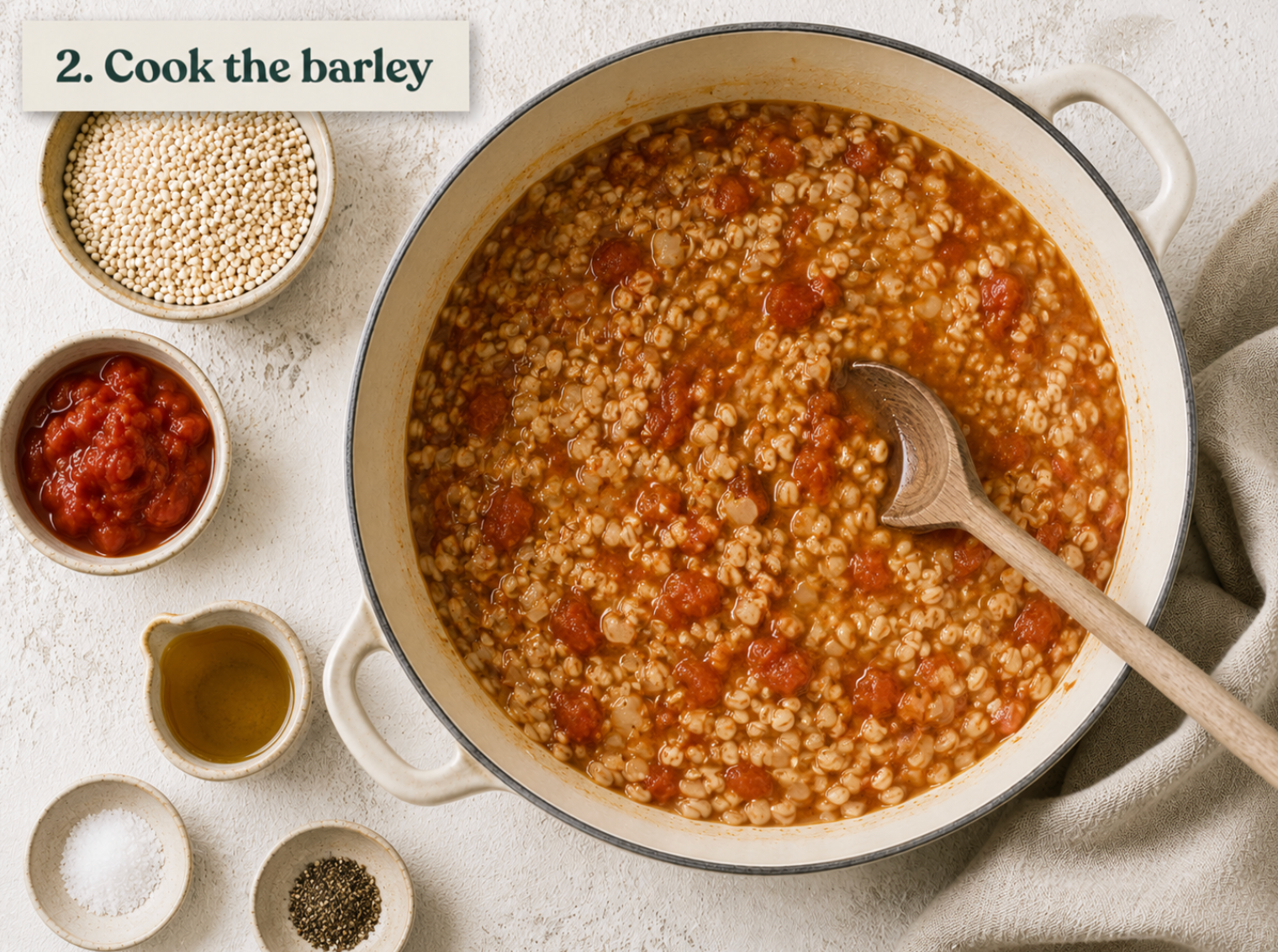
2. Cook the barley: Add the tomato, rinsed barley, and stock. Bring to a gentle simmer and cook for 30 to 35 minutes, stirring occasionally, until the barley is tender and the liquid has thickened around it. Add a splash more water if it tightens too early. Season with salt and pepper.
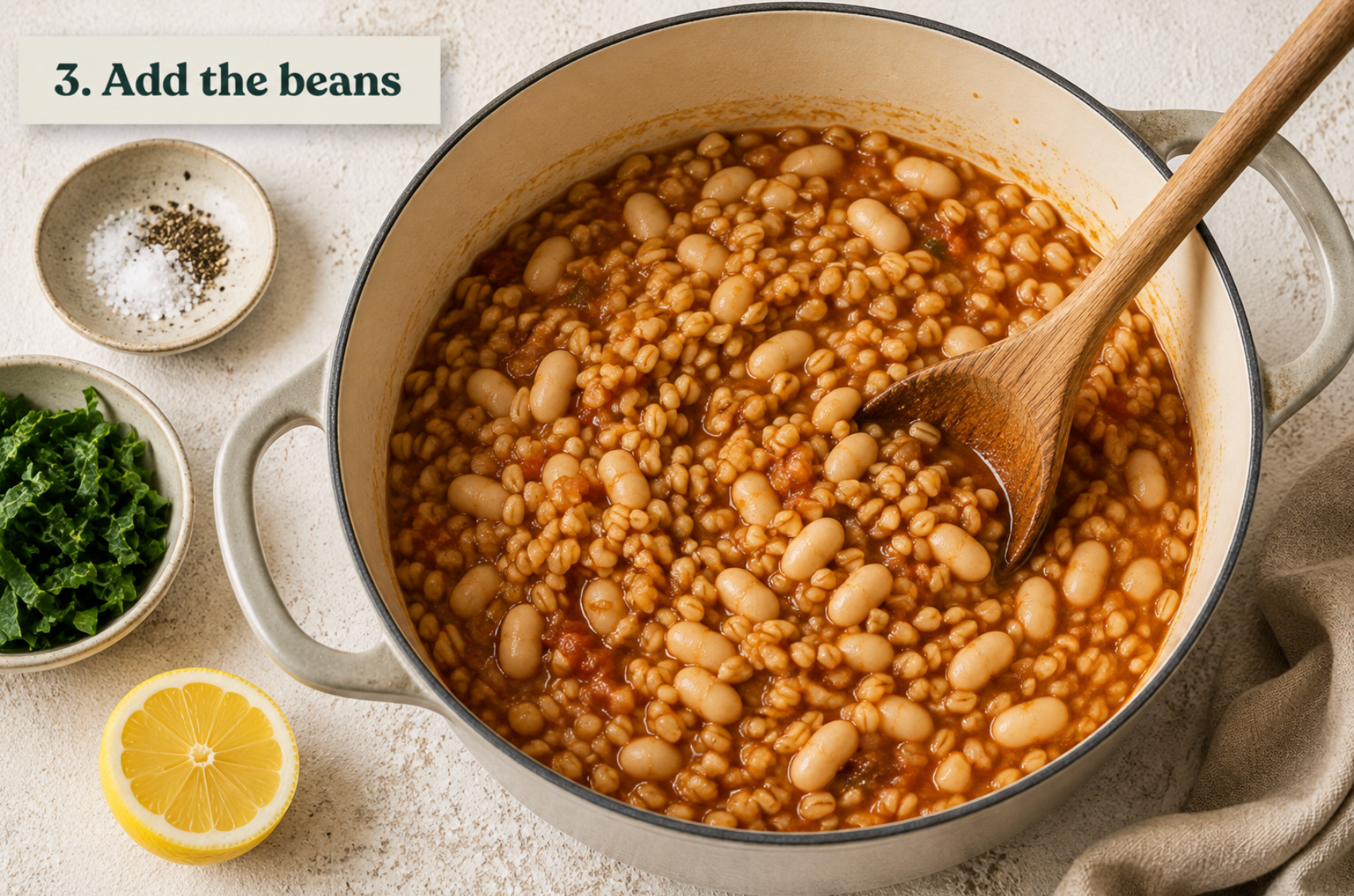
3. Add the beans: Stir the white beans through the barley and cook for another 3 to 4 minutes, just long enough for them to warm through and start softening at the edges.
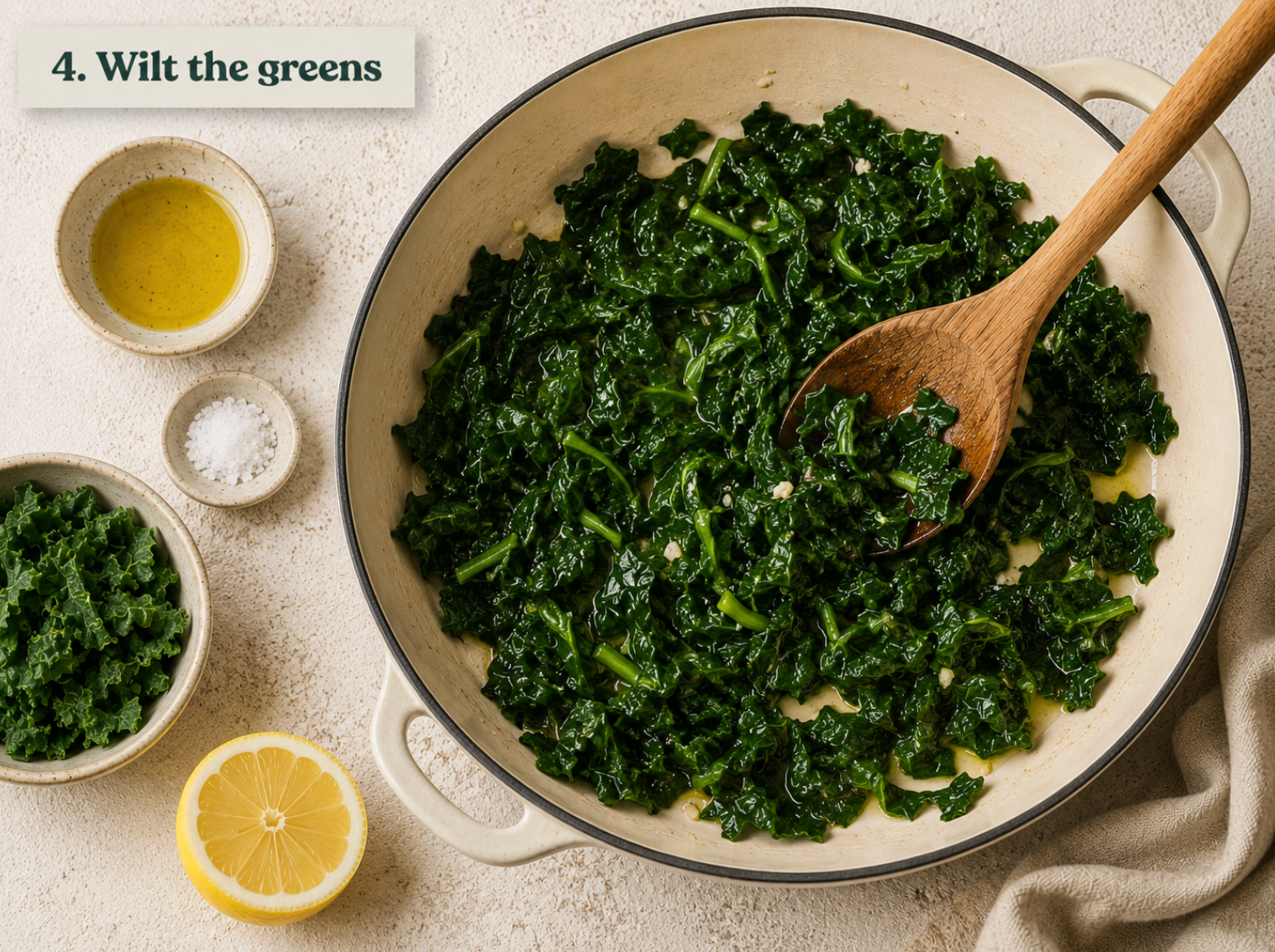
4. Wilt the greens: In a separate pan, warm the olive oil and add the greens with a pinch of salt. Stir for 2 to 3 minutes until just wilted, then finish with a squeeze of lemon.
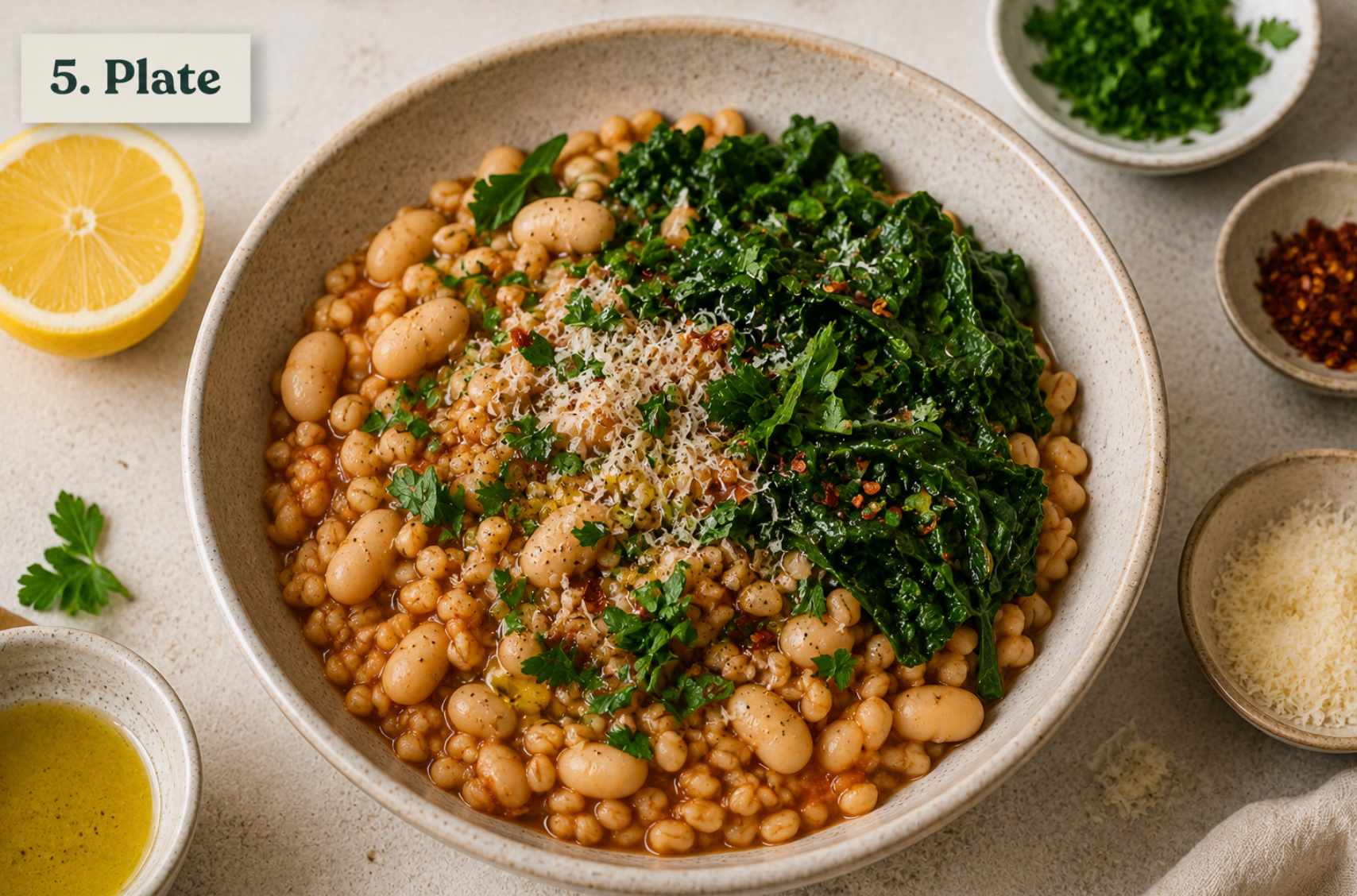
5. Plate: Spoon the barley and beans into bowls, top with the greens, then finish with lemon juice, plenty of parsley, a generous drizzle of olive oil, and chilli flakes or grated cheese if using.
Barley is one of those ingredients that earns its place in a heart-friendly diet.
Its biggest advantage is beta-glucan, a type of soluble fibre that can help lower LDL cholesterol when you eat enough of it regularly. It works by forming a gel-like substance in the gut that helps reduce the amount of cholesterol your body reabsorbs.
That is why both barley and oats are often recommended when cholesterol is something you are trying to improve. In Europe, there is even an authorised health claim for beta-glucan from oats and barley, based on a daily intake of 3g.
For this bowl, the benefit is less about one meal doing something dramatic and more about making that kind of eating easier to repeat. Barley gives you the soluble fibre, the beans add more fibre and plant protein, and the olive oil brings in unsaturated fats.
If you are tracking ApoB, it is useful to know that the strongest evidence for lowering ApoB specifically comes from studies on oat beta-glucan. Barley has shown clearer effects on LDL and non-HDL cholesterol.
Axo Longevity measures ApoB alongside your wider cardiovascular panel, so you can see how your results change over time rather than relying on one cholesterol number alone.
→ Get a clearer picture of your health
What foods help lower cholesterol?
Foods linked to lower cholesterol include oats, barley, legumes, nuts, extra virgin olive oil, and oily fish. Soluble fibre and unsaturated fats do most of the work. Research connects this pattern to lower LDL cholesterol and ApoB when it becomes a regular way of eating.
What is ApoB, and why does it matter?
ApoB, or apolipoprotein B, sits on the surface of every cholesterol particle that can lodge in an artery wall. Each particle carries exactly one ApoB, so counting ApoB gives you the number of particles. It tends to predict cardiovascular risk more reliably than a standard LDL reading alone.
How much beta-glucan do you need each day?
The European Food Safety Authority sets the threshold at 3g of beta-glucan a day from oats or barley for a cholesterol benefit. A bowl of porridge, a portion of barley, or a mix across the day will get you there. Consistency across weeks matters more than any single serving.
Is barley particularly beneficial for cholesterol?
Yes, barley is one of the better grains for cholesterol because it is high in beta-glucan, the soluble fibre with an authorised European health claim behind it. Randomised trials show that barley beta-glucan lowers LDL cholesterol and non-HDL cholesterol when eaten consistently.
Related to the Longevity Kitchen
References