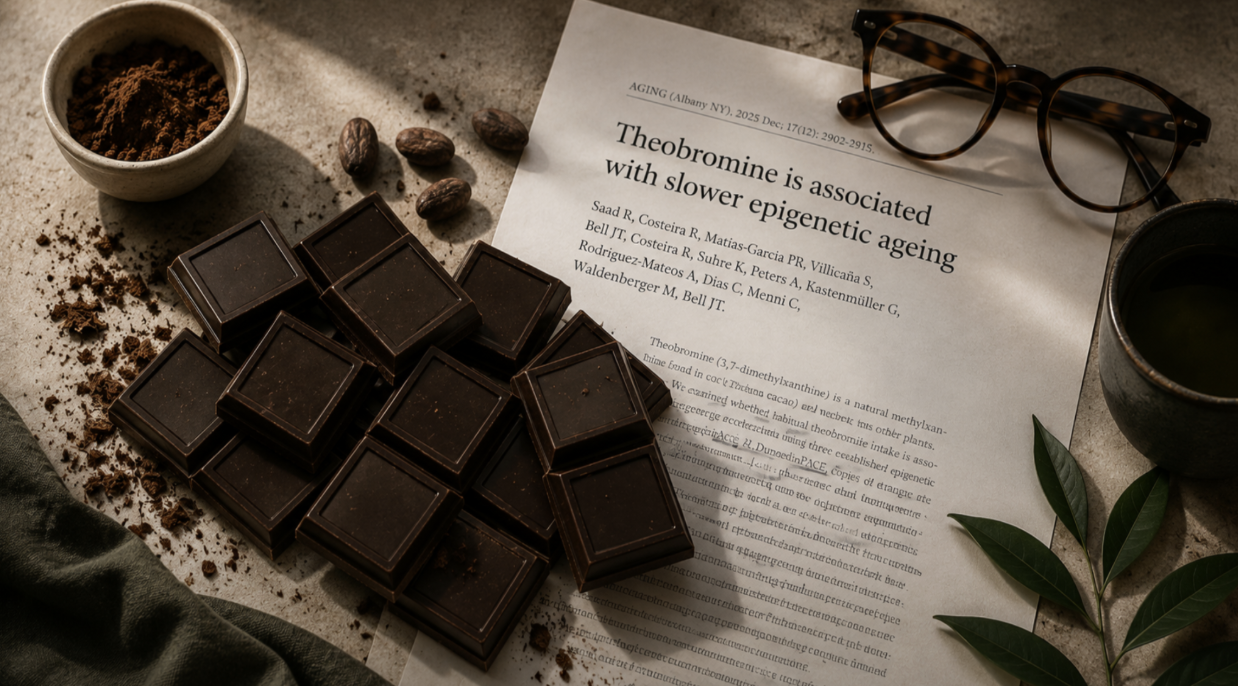
Un compuesto del cacao llamado teobromina se asoció con una menor edad biológica en casi 1700 adultos del Reino Unido y Alemania. El hallazgo es real y merece la pena entenderlo, pero no es una razón para comer más chocolate.
Un estudio de 2025 del King's College de Londres descubrió que las personas con niveles más altos de teobromina, un compuesto natural presente en el cacao, tendían a tener una edad biológica ligeramente inferior a su edad real. Fue una observación realizada en casi 1700 personas, no una prueba de que comer chocolate ralentice el envejecimiento. El vínculo se mantuvo específicamente para la teobromina, incluso después de tener en cuenta la cafeína, y el efecto fue modesto.
La conclusión no tiene que ver realmente con el chocolate. Es que su edad biológica puede diferir en años de la cifra que aparece en su pasaporte, y esa brecha es medible.

Investigadores del King's College de Londres, en un artículo publicado en la revista Aging en diciembre de 2025, analizaron si la teobromina estaba relacionada con la rapidez con la que las personas envejecen por dentro. La midieron en la sangre de 1669 adultos: 509 mujeres del estudio TwinsUK del Reino Unido, con un resultado que luego se replicó en 1160 hombres y mujeres del estudio KORA de Alemania.
Las personas con niveles más altos de teobromina tendían a tener una edad biológica inferior a su edad real. El equipo estimó el envejecimiento de dos maneras:
De todos los compuestos del cacao y el café que analizaron, incluida la cafeína, el vínculo solo se mantuvo para la teobromina.
La autora principal, la profesora Jordana Bell, lo describió como un vínculo entre un componente del chocolate negro y "mantenerse joven durante más tiempo", aunque dejó claro que el estudio no es una recomendación para comer más chocolate.
Se trata de una asociación, no de una relación de causa y efecto. Demuestra que las personas con más teobromina en sangre tendían a parecer biológicamente más jóvenes. No puede demostrar que la teobromina sea lo que marcó la diferencia.
Algunas razones para mantener la perspectiva:
La ciencia es sólida. El consejo de comer más chocolate, no.
Los investigadores fueron claros: consumir más chocolate negro no es automáticamente beneficioso, ya que aporta azúcar y grasas junto con cualquier otro componente útil. Un compuesto del cacao merece seguir siendo estudiado, pero, por ahora, ahí termina todo.
La razón por la que esto importa tiene poco que ver con el chocolate y todo que ver con lo que se mide. La edad biológica es una estimación de la edad de tu cuerpo basada en su funcionamiento, en lugar de cuántos cumpleaños has celebrado. Se determina a partir de patrones en tu ADN y marcadores como la longitud de los telómeros, y puede estar por delante o por detrás de tu edad cronológica.
Dos personas nacidas en la misma semana pueden tener edades biológicas con años de diferencia. Lo que determina esa brecha está, en gran medida, a tu alcance:
Eso es lo que convierte a la edad biológica en uno de los indicadores más útiles para la longevidad. Convierte el envejecimiento de algo abstracto en algo que puedes observar y, con el tiempo, modificar. Para obtener una visión completa, consulta nuestra guía completa sobre la edad biológica frente a la edad cronológica.
Si disfrutas del buen chocolate negro, este estudio es un pequeño punto a su favor, pero no una razón para cambiar tu dieta:
La conclusión más importante está detrás del titular.
Tu edad biológica puede diferir de tu edad real por años, y no puedes saber hacia qué lado se inclina la tuya basándote solo en cómo te sientes.
Esa brecha es la diferencia entre estar dentro de los rangos normales y estar en un estado óptimo:
Descubre qué mide un panel completo de Axo
1) ¿El chocolate negro retrasa el envejecimiento?
No según lo que este estudio puede demostrar. Descubrió que las personas con mayores niveles en sangre de un compuesto del cacao llamado teobromina tendían a tener una edad biológica menor, pero esto fue una asociación y no una relación de causa y efecto. No es una prueba de que comer más chocolate negro ralentice tu envejecimiento.
2) ¿Qué es la teobromina?
La teobromina es un compuesto natural que se encuentra principalmente en el cacao y, en menor medida, en el café. Está químicamente relacionada con la cafeína, pero es un estimulante mucho más suave. Investigaciones anteriores la han vinculado con algunos beneficios para el corazón, y este estudio de 2025 relacionó niveles más altos en sangre con una menor edad biológica.
3) ¿Cuánto chocolate negro debería comer?
No existe ninguna cantidad que este estudio respalde como dosis antienvejecimiento. Si te gusta el chocolate negro, una pequeña porción con alto contenido de cacao y bajo en azúcar es una opción razonable con ciertos beneficios para la presión arterial y los vasos sanguíneos. Es mejor disfrutarlo como un placer con ventajas, no como una intervención de salud.
4) ¿Qué es la edad biológica?
La edad biológica es una estimación de la edad que aparenta tu cuerpo según su funcionamiento, en lugar de los años que has vivido. Se mide a partir de marcadores como los patrones de metilación del ADN y la longitud de los telómeros, y puede ser mayor o menor que tu edad cronológica.
5) ¿Se puede medir la edad biológica?
Sí. La edad biológica se estima a partir de biomarcadores específicos en la sangre, analizados frente a rangos óptimos en lugar de los amplios rangos de referencia que utiliza un chequeo estándar. Un panel integral está diseñado para revelar precisamente estos marcadores.